EMS Controlled Substance Tracking: DEA Rules in the Field
A field guide to EMS controlled substance tracking under DEA rules: logging narcotic waste, getting witness signatures offline, and staying ready for audits.
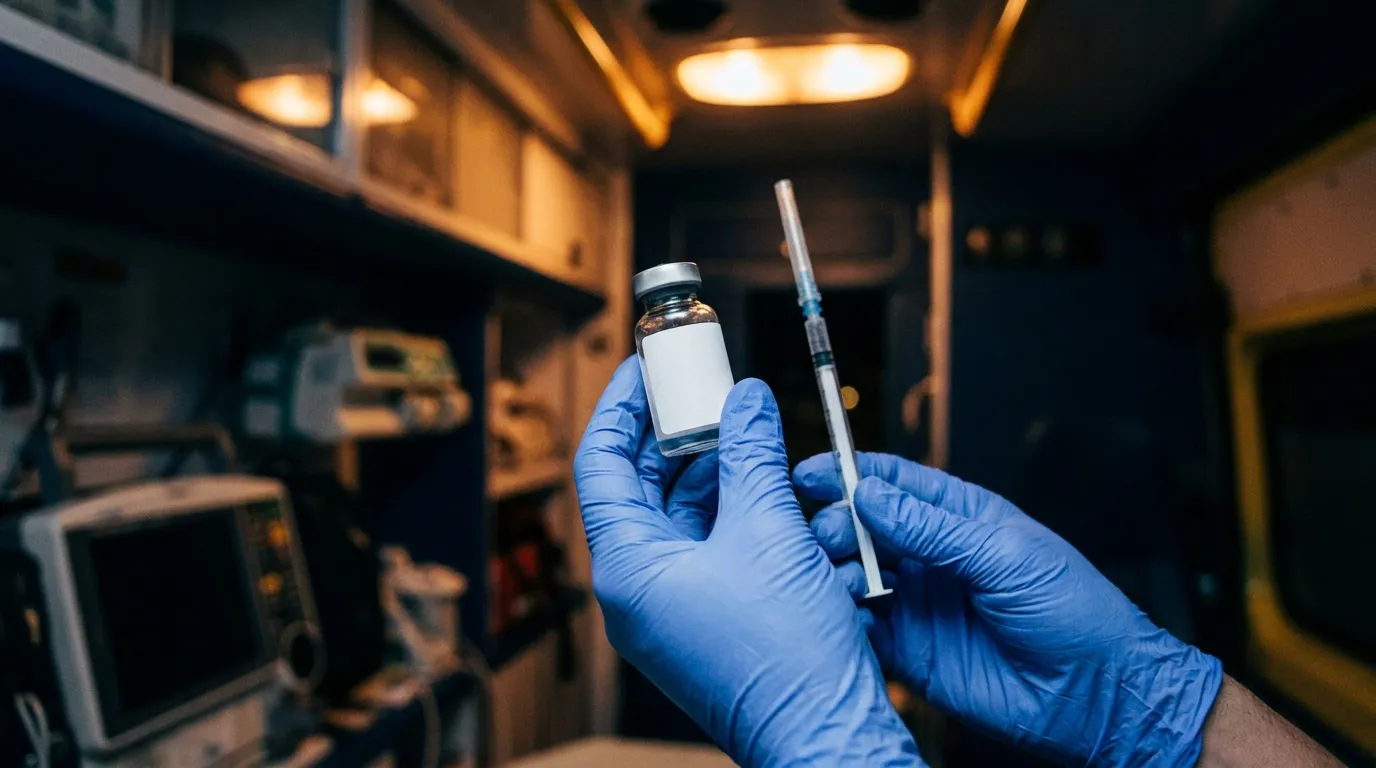
EMS controlled substance tracking comes down to one idea: you have to account for every dose from the moment your agency receives it to the moment it's given or destroyed. When you push part of a fentanyl vial, the leftover has to be wasted and documented. DEA's 2026 EMS rule says the disposal record names the person who wasted it and one witness, and most agencies want that witness to sign right then. Your state and medical director may add more on top. Get that part wrong and the whole chain of custody falls apart.
Field work makes this harder than it sounds. You're charting in a dark rig, in someone's living room, or at a packed triage desk while the next call is already holding. That's exactly when a waste entry gets skipped or a nurse walks off before signing.
A missing witness signature looks small on a busy night. It looks a lot bigger when a DEA diversion investigator or your state board is reading your drug logs line by line. Clean records and simple field habits protect your crew and your agency's registration.
What do Title 21 CFR 1304 rules mean for EMS?
Part 1304 is the federal recordkeeping rule for anyone registered to handle controlled substances, and that now includes EMS agencies directly. Every inventory and record it requires has to be kept for at least two years and be available for inspection. Each dose received, given, transferred, or destroyed needs a clear entry.
The Protecting Patient Access to Emergency Medications Act of 2017 gave EMS a clear legal footing. It lets crews give Schedule II through V drugs under a medical director's standing order or a verbal order, as long as state law allows it. In February 2026, DEA published the final rule putting the Act into practice, and it took effect March 9, 2026. Under that rule, agencies not owned by a hospital register with DEA and keep complete records of what's received, administered, transferred, and destroyed at each registered and designated location.
You know the usual list. Fentanyl and morphine are Schedule II. Ketamine is Schedule III. Midazolam is Schedule IV. Under the federal rule, drugs kept on a rig have to sit in a securely locked, substantially constructed cabinet or safe that can't be easily removed, and the vehicle has to be locked when it's parked outside the station. Many states and medical directors add their own requirements on top of that, such as double-lock storage and shift counts, so check what yours expect.
The test an investigator applies is simple: what left the safe has to match what shows up on your charts. If a vial went out, there should be a patient care record or a documented waste that explains where it went.
How do you get a waste signature with no signal?
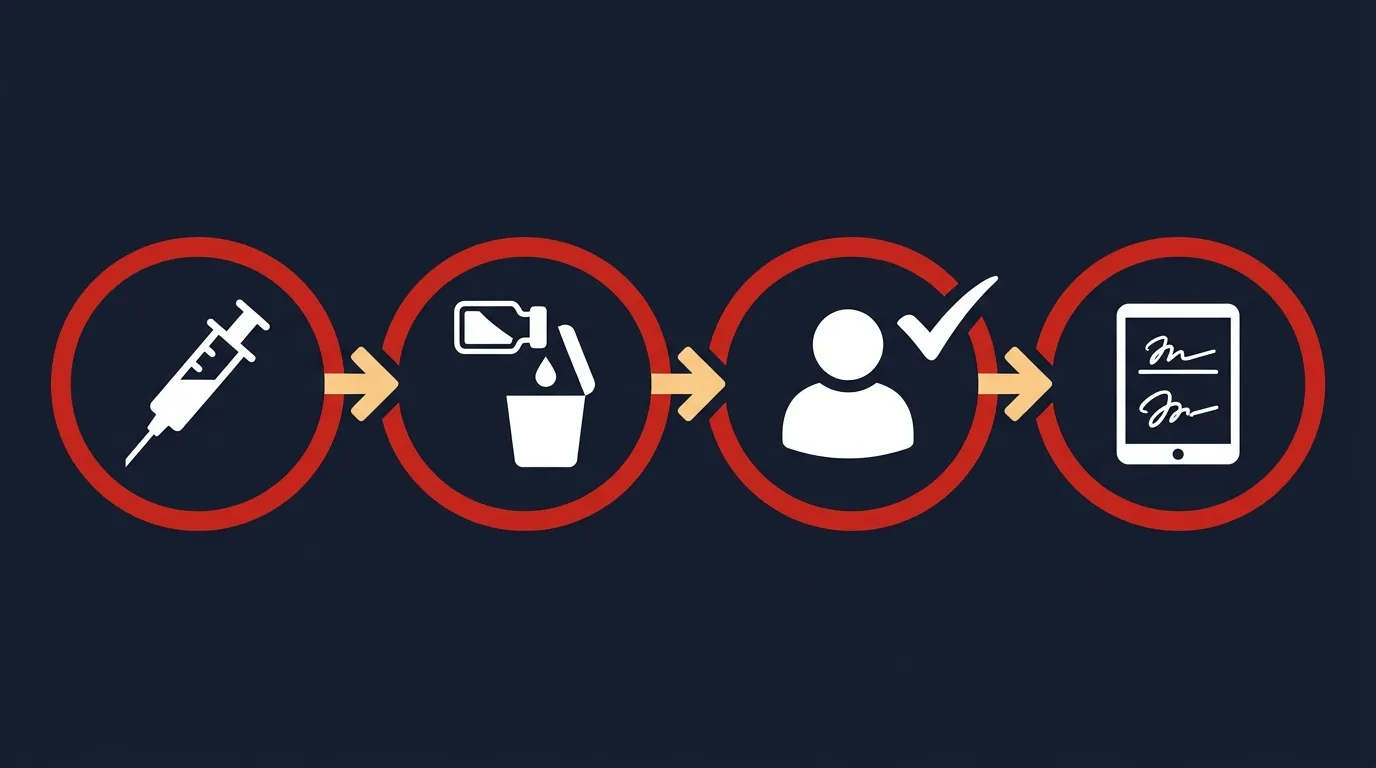
Your charting tablet needs to save the witness signature right on the device, with or without a connection. Hospital basements, concrete parking structures, and rural ED bays often have no usable signal. A triage nurse isn't going to stand there while a web page tries to load.
Here's how it goes wrong. You gave 50 mcg of fentanyl from a 100 mcg vial during transport. At the bedside you waste the remaining 50 mcg into the sharps container and hand the tablet to the nurse. The screen spins on hospital Wi-Fi, the nurse gets pulled to a code, and now you're hunting for a witness an hour later. Now there's a waste on your record that nobody witnessed.
Charting software that works offline fixes this at the bedside. The nurse's name, credentials, and signature go straight onto the tablet in seconds. The record holds until the tablet reconnects, then it uploads. If you want the details of how that hand-off works, see our guide to offline ePCR charting and sync.
How do you document given versus wasted amounts?
Write three numbers for every partial vial: the total in the vial, the dose given, and the amount wasted. "One vial" or just the patient dose won't hold up. Reviewers flag those entries fast.
Single-dose vials rarely match the dose your patient needs. Say you draw 50 mcg from a 100 mcg vial for pain. The other 50 mcg gets wasted right away. If you only log what you gave, half that vial has no paper trail.
The math on your chart should always close: total in vial = dose given + amount wasted. Note how you disposed of it too, whether that was the ED sharps container or a drug disposal pouch.
| Record field | Solid entry | Risky shortcut | Why it causes trouble |
|---|---|---|---|
| Total in vial | 100 mcg / 2 mL | Left blank | No starting amount to reconcile |
| Dose given | 50 mcg / 1 mL | "1 vial given" | Patient dose is unclear |
| Amount wasted | 50 mcg / 1 mL | "Wasted rest" | No number for the waste |
| Disposal method | Sharps container at ED triage | "Disposed" | Method can't be checked |
| Witness | Full name, RN, license number | "Triage nurse" | Witness can't be identified |
| Signatures | Medic and witness both sign | Medic signs alone | Waste isn't witnessed |
How do you stay ready for a surprise drug audit?
You stay ready by checking three sources against each other all the time: dispatch records, patient care reports, and your safe or drug box counts. During an inspection, investigators can trace vials from the safe to run reports and look for anything that doesn't line up.
They'll read shift logs, box seal numbers, and charts looking for red flags, like waste amounts that don't add up, missing witness signatures, or entries made long after the call. Matching your drug box log against your ePCR records every shift catches the gaps while people still remember the call. Our post on building fair chart audits covers how to set up those reviews, and the CAD reconciliation guide shows how to tie run numbers back to dispatch.
If you find theft or a significant loss, federal rules require written notice to your local DEA Field Division within one business day of discovery. You then file DEA Form 106 electronically within 45 days of discovery. Good records make explaining a simple breakage much easier.
What documentation traps should crews avoid?
Six traps show up again and again. Each one is easy to fix if you catch it on scene instead of at the end of the shift.
-
The walking nurse. You leave triage before the receiving nurse signs. Once they've moved on, getting that signature later is tough.
-
Vague waste notes. "Wasted remainder" instead of an exact amount like 50 mcg in 1 mL.
-
Late waste entries. Signing the waste hours after the call. Timestamps show when the entry was made, so log the waste when it happens.
-
No disposal method. Leaving out how the drug was destroyed, such as the ED sharps container or a disposal pouch.
-
Mismatched run numbers. Swapping a vial at the pharmacy with a restock slip that doesn't match the incident number.
-
Unlogged broken vials. Tossing a dropped ampoule without documenting the break and having your partner sign as witness.
What does a clean waste look like on a real call?
Frequently asked questions
Who can witness paramedic narcotic waste?
That depends on your state rules and your medical director's protocols. Federal rules say a witness has to be named, but not who qualifies. Common choices are the receiving ED nurse, a physician, or a second licensed provider on your crew, so check which ones your protocols accept.
What if the nurse won't sign for the waste?
Ask the charge nurse, another nurse, or a physician to watch the waste. Never sign for a witness yourself. Always record the name of the person who actually watched you destroy the drug.
How long do agencies keep controlled substance records?
Federal rules require at least two years. Some states require longer, so follow whichever rule is stricter.
How does an ePCR capture a signature without internet?
Offline charting software saves the signature, the witness name, and the time directly on the tablet. It uploads the full record once the tablet finds a cell signal or station Wi-Fi. When you're comparing products, put this on your list of questions from our guide on how to choose ePCR software.
When does an agency file DEA Form 106?
Whenever it discovers theft or significant loss of controlled substances. Written notice goes to the DEA Field Division within one business day of discovery, and the completed Form 106 follows within 45 days.
Want to see how witness signatures and narcotic waste are captured in an offline iPad chart? Take a look at the Mobile Medic features.
Sources
- eCFR: 21 CFR Part 1304, Records and Reports of Registrants (external site)
- CDC Public Health Law: Protecting Patient Access to Emergency Medications Act (external site)
- ACEP: DEA Issues Long-Awaited EMS Standing Orders Final Rule (Feb. 5, 2026) (external site)
- JD Supra: DEA Final Rule for Emergency Medical Services Takes Effect (external site)
- Federal Register: Reporting Theft or Significant Loss of Controlled Substances (June 22, 2023) (external site)
- DEA Diversion Control Division (external site)
- Federal Register: Registering Emergency Medical Services Agencies Under the Protecting Patient Access to Emergency Medications Act of 2017 (Feb. 5, 2026) (external site)