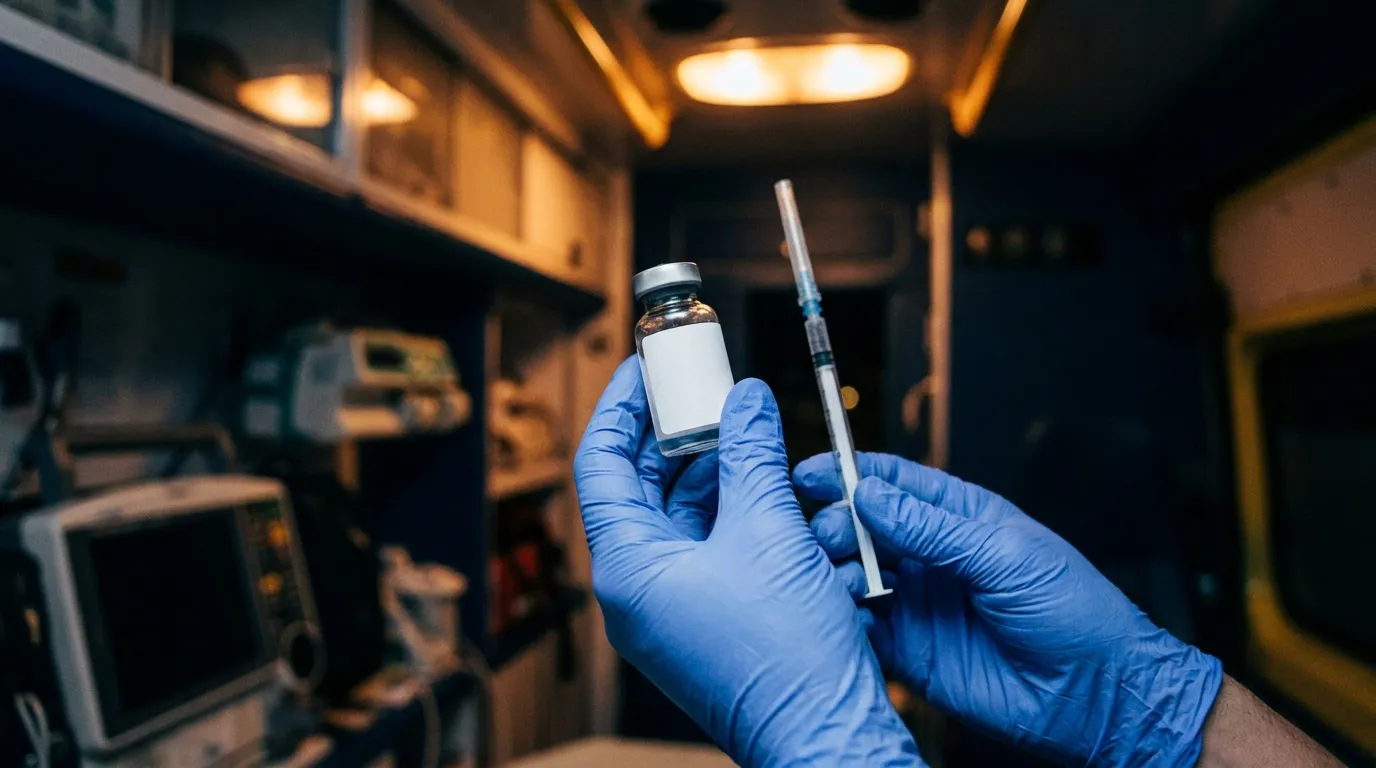
Prehospital Whole Blood Documentation: A Field Guide
Prehospital whole blood documentation, step by step: shock criteria, ISBT 128 labels, warming, calcium, reactions and the cooler log your blood bank expects.
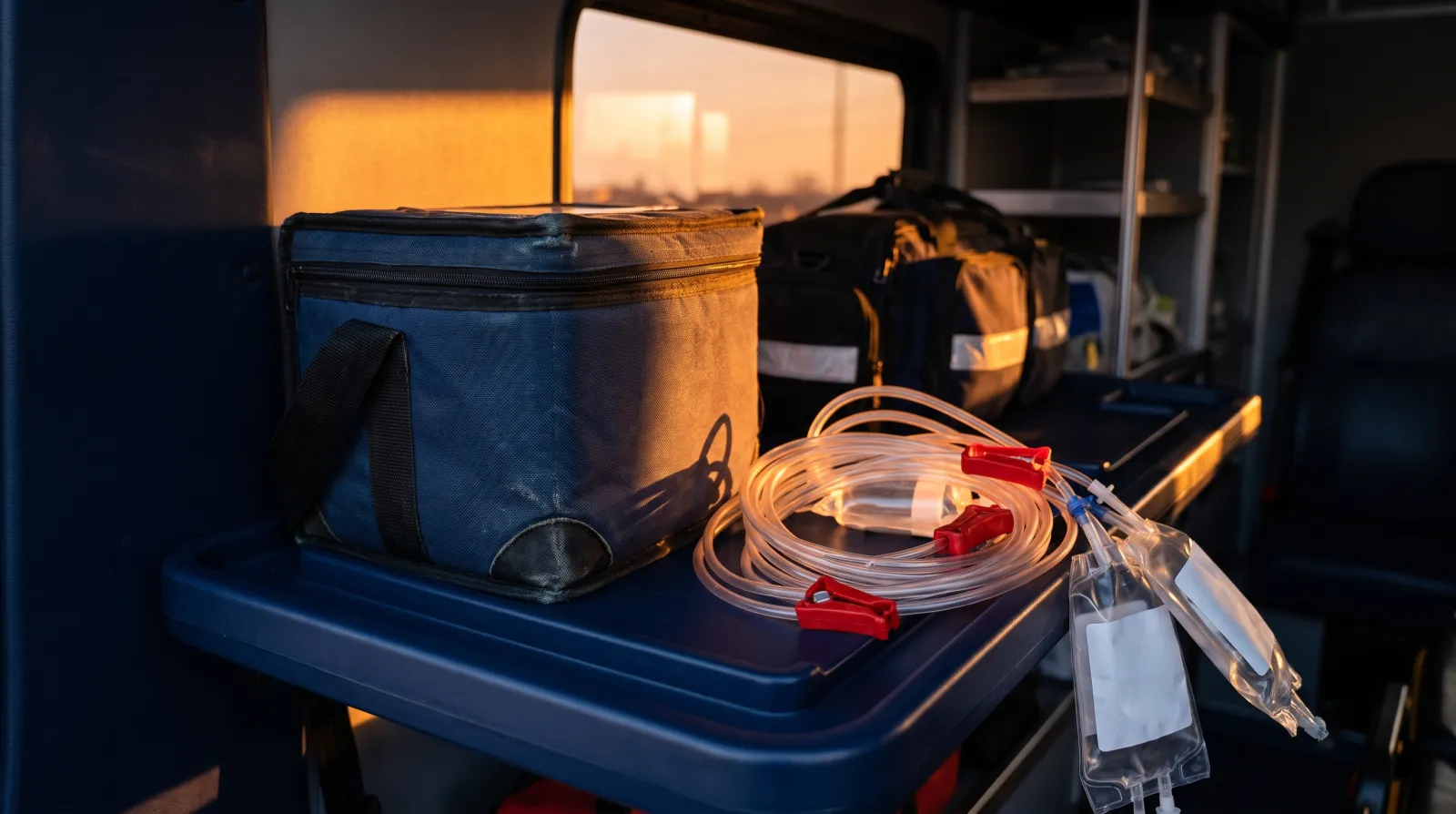
Prehospital whole blood documentation has to answer three questions for anyone who reads your chart later: why you hung the unit, exactly which unit it was, and whether it stayed safe from the cooler to the vein. Get those right and the trauma team, the hospital blood bank and your medical director can all follow what you did. Miss a digit in the donation number and somebody ends up chasing that unit for days.
More civilian services now carry low titer O whole blood (LTOWB) for hemorrhagic shock. The THOR Network, a group of military and civilian trauma researchers, favors whole blood over separate components for bleeding patients in the field. That's a big clinical step, and it comes with a chain of custody that's stricter than most of what we chart. Every unit has to be traceable from the donor to the patient, and your run report is the link in the middle.
What belongs in prehospital whole blood documentation?
Before getting into each piece, here's the short version. If your chart covers these items, most reviewers won't have to call you back.
| Item | What to record | Why it matters |
|---|---|---|
| Indication | Vitals, shock index, mechanism or bleeding source, perfusion findings | Shows the patient met your protocol before you spiked the bag |
| Unit identity | Full donation identification number, blood group, product code, expiration | Lets the blood bank trace the unit to the patient |
| Delivery | Access site and gauge, warmer used, start and stop times, volume | Shows how the blood actually went in |
| Calcium | Drug, dose, route, line, time | Documents how you handled citrate in the unit |
| Response | Repeat vitals and mental status after each unit | Shows whether the blood worked |
| Reactions | Signs, time stopped, volume given, treatment | Starts the hospital's reaction workup |
| Custody | Cooler temps, seal numbers, who handed off to whom and when | Proves the unit stayed in a safe range |
Which shock criteria justify field whole blood?
Your protocol sets the triggers, but your chart has to prove the patient met them. "Pt in shock, blood given" won't hold up in a review.
Most programs lean on the shock index, which is heart rate divided by systolic pressure. A review in Open Access Emergency Medicine puts the normal range at about 0.5 to 0.7, with values near or above 1.0 pointing toward shock. So a patient at 120 over a systolic of 88 sits around 1.36. Chart the raw vitals and the calculated number, and do it before the first unit goes up, so the sequence is obvious.
The same review is clear that shock index shouldn't be used on its own. That's why the rest of your exam matters. Write down the mechanism or bleeding source: penetrating torso trauma, a crushed pelvis, a major extremity bleed, or a medical bleed like postpartum hemorrhage if your protocol covers it. Then describe perfusion in plain words. Weak or absent radial pulses, cool and pale skin, delayed cap refill, a patient who's getting quieter. If you carry a lactate meter, log the reading and the time.
Good indication charting looks a lot like good medical necessity charting. We walk through that mindset in our EMS medical necessity documentation guide.
How do you read an ISBT 128 blood bag label?
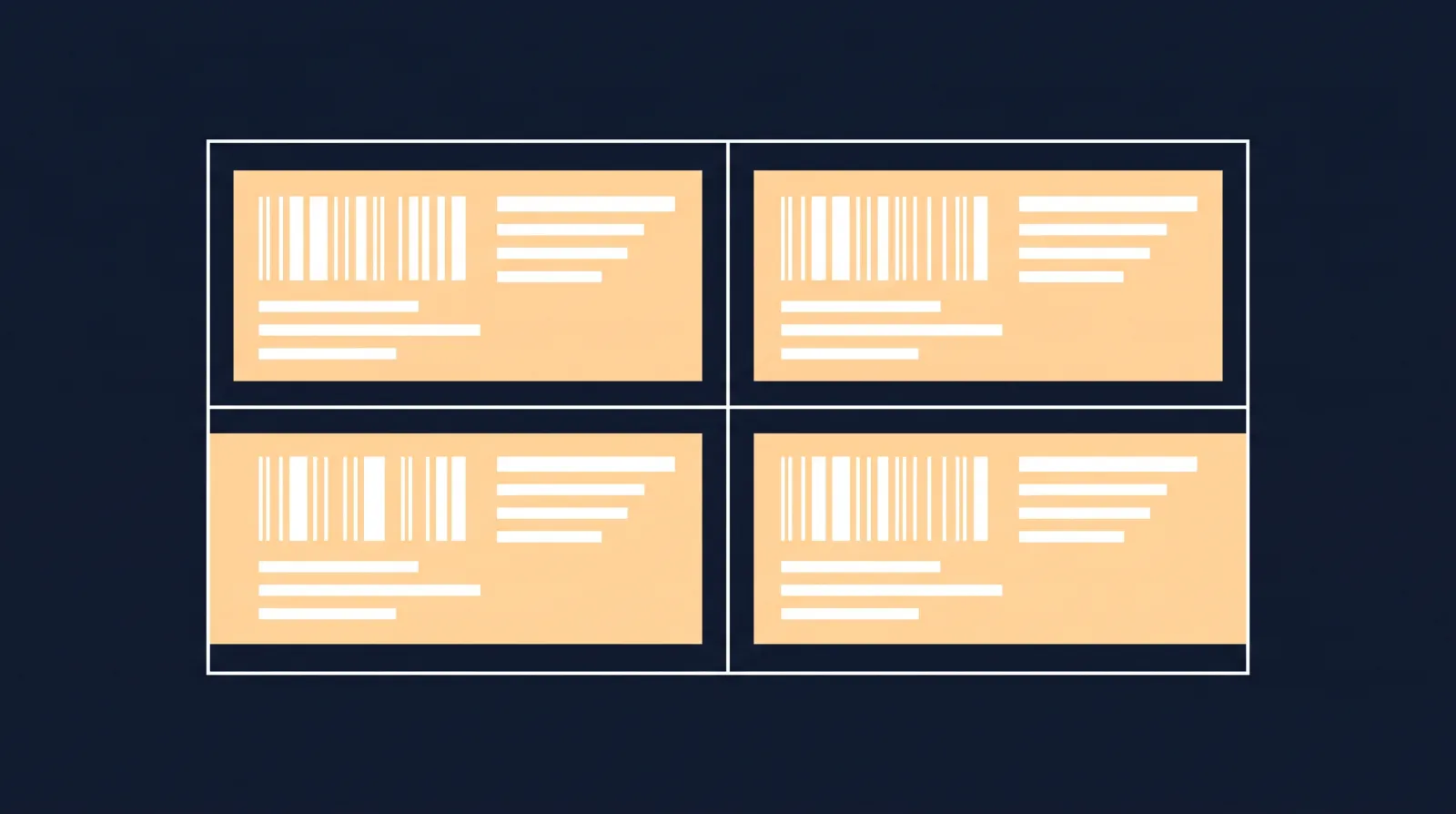
Most blood products in the US carry ISBT 128 labels, the international standard maintained by ICCBBA. Once you know the layout, you can find what you need fast, even under dim cab lights.
The most important piece is the donation identification number (DIN). It's a 13-character code made up of a facility code, a year code and a serial number, and it follows that unit from the donor to your patient. Record the whole thing. Don't shorten it, and don't guess at a smudged character.
The other three areas give you the ABO and RhD group, the product code that says what component it is, and the expiration date and time. Your field units are typed and titer-screened by the blood supplier, so check the label matches what your program says you carry. Never hang a unit past its expiration.
If your ePCR or tablet can scan ISBT 128 barcodes, use it. Scanning pulls the DIN, group, product code and expiration straight into the chart and takes typos off the table. If the scanner won't read the label, fall back to a two-person read-back at the bedside: one medic reads each character aloud and the other confirms it on the chart.
What should you chart about warming and infusion?
Cold blood makes a bleeding patient worse. Hypothermia slows clotting, and a trauma patient can't afford that. That's why most programs run whole blood through an in-line warmer.
Note which warmer you used and anything your program tracks for it, like the device ID or cartridge lot. If the warmer showed an output temperature, write it down. The point is to show the blood was actually warmed on its way in. A warmer sitting in the kit proves nothing.
Then document how the blood went in:
- Access type, site and gauge (large-bore IV or IO, and which bone if IO)
- Delivery method: pressure bag, push-pull syringe or gravity
- Start time and stop time for each unit
- Total volume given
- Any trouble with flow, a blown line or a clotted catheter
Why does calcium belong in the blood chart?
Stored blood contains citrate so it won't clot in the bag. Once it's in your patient, citrate binds calcium, and low calcium weakens the heart and slows clotting. NAEMSP's review of the topic notes that trauma patients can run low on calcium even before any blood goes in.
That's why many programs pair whole blood with IV calcium. Protocols vary, and the evidence on exact dosing is still developing, but a common pattern is about a gram of calcium chloride given early in the resuscitation. Follow your medical director's protocol, then chart the drug, the dose, the route, which line it went through and the exact time. Don't run calcium through the same line as the blood.
Calcium given late or not charted at all is one of the first things a reviewer will flag. Our post on building fair chart audits covers how QA teams usually look at these time-sensitive items.
How do you document a transfusion reaction?
Reactions to low titer whole blood are uncommon, but you still have to watch for them and write down what you see.
Know the main patterns:
- Acute lung injury (TRALI): sudden shortness of breath, crackles, dropping SpO2
- Volume overload (TACO): pulmonary edema and rising blood pressure
- Febrile reaction: fever and chills without other signs
- Hemolytic reaction: fever, flank pain, rising heart rate, dark urine
- Allergic reaction: hives, wheezing, hypotension
If you suspect a reaction, stop the blood. Clamp and disconnect the blood tubing, keep the bag and tubing together in a clean biohazard bag, and keep the line open with saline. Treat per protocol.
Then chart the time you stopped, how much went in, the signs that made you stop, repeat vitals and any drugs you gave. Hand the bag and tubing to the receiving staff and note who took them. The blood bank needs both for its workup.
How do you document cooler temps and custody?
Federal rules require stored whole blood to be kept between 1 and 6 degrees Celsius. Too warm and the unit can grow bacteria and lose clotting function. Freezing damages the red cells. Your cooler log is how you prove the unit never left that range.
Most programs use validated coolers with a temperature data logger inside. Follow your blood supplier's rules for when to check and record the temperature, which usually means at shift change and after any run where the cooler was opened.
Chain of custody works a lot like your narcotics box. When you take the cooler at shift start, record the time, the seal number and the temperature. When a unit goes into a patient, the DIN in your chart closes that loop. When an unused unit goes back to the blood bank, get the receiving tech's name and the time. Our post on controlled substance tracking covers the same two-person, every-handoff habits.
How often units rotate back to the hospital depends on your agreement with the blood supplier. Know that schedule and chart each return.
What does this look like on a real call?
Frequently asked questions
What about Rh-positive blood in women of childbearing age?
Giving RhD-positive blood to an RhD-negative woman can cause her to form antibodies that may affect future pregnancies. Programs that carry O-positive blood weigh that risk against the immediate risk of bleeding to death, and protocols generally favor stopping the hemorrhage. Chart the patient's apparent age and sex, and make sure the receiving hospital knows the unit's blood group so they can plan follow-up.
How is pediatric whole blood dosed?
Pediatric doses are weight-based and set by your protocol. Use a measured weight or a length-based tape, and chart the weight, the calculated dose in milliliters and the actual volume given. A push-pull syringe setup is common for small patients because it gives better control over volume.
What temperature does whole blood need to stay at?
Federal rules require stored whole blood to be kept between 1 and 6 degrees Celsius. Your blood supplier will set the specific rules for your coolers, loggers and what to do if a unit goes out of range. In general, a unit that leaves the range shouldn't go into a patient until the blood bank says it's okay.
How often should supervisors review cooler logs?
Set the schedule with your blood supplier and medical director, and write it into your program policy. Most programs check the cooler at every shift change and have someone review the logger data on a regular cycle. Keep the records, because your state and your blood supplier may ask to see them.
Can EMS agencies bill for whole blood given in the field?
Billing rules for blood products vary by payer and state, so check with your billing team before you count on reimbursement. Either way, a chart that clearly shows the indication, the unit and the response gives your billing team the best shot. NASEMSO has published guidance on coding blood product administration in NEMSIS, and our NEMSIS 3.5.1 field prep guide covers getting your data ready for state reporting.
Want a faster way to chart blood products?
Whole blood charting goes best when the label scan, the times and the vitals all land in one place without retyping. Mobile Medic's iPad ePCR includes a blood product scanner that reads ISBT 128 labels into the chart, and it works offline. See how it fits into the rest of the run form in our feature overview.
Sources
- Koch et al., Shock Index in the Emergency Department: Utility and Limitations (Open Access Emergency Medicine, 2019) (external site)
- ICCBBA: ISBT 128 Standard for Traceability (external site)
- 21 CFR 640.2: Whole Blood General Requirements (storage temperature) (external site)
- NAEMSP: From Triad to Diamond, Calcium in Prehospital Trauma Resuscitation (external site)
- THOR Network Position Paper on Permissive Hypotension in Remote Damage Control Resuscitation (external site)
- AABB (Association for the Advancement of Blood and Biotherapies) (external site)
- NEMSIS Technical Assistance Center (external site)
- NASEMSO: Blood Product Administration Documentation (external site)