Hospital EMS Data Exchange: Tracking Trauma Outcomes
Hospital EMS data exchange closes the feedback loop: send charts to the ED, get trauma outcomes back for QA, and fix face sheet gaps that stall billing.
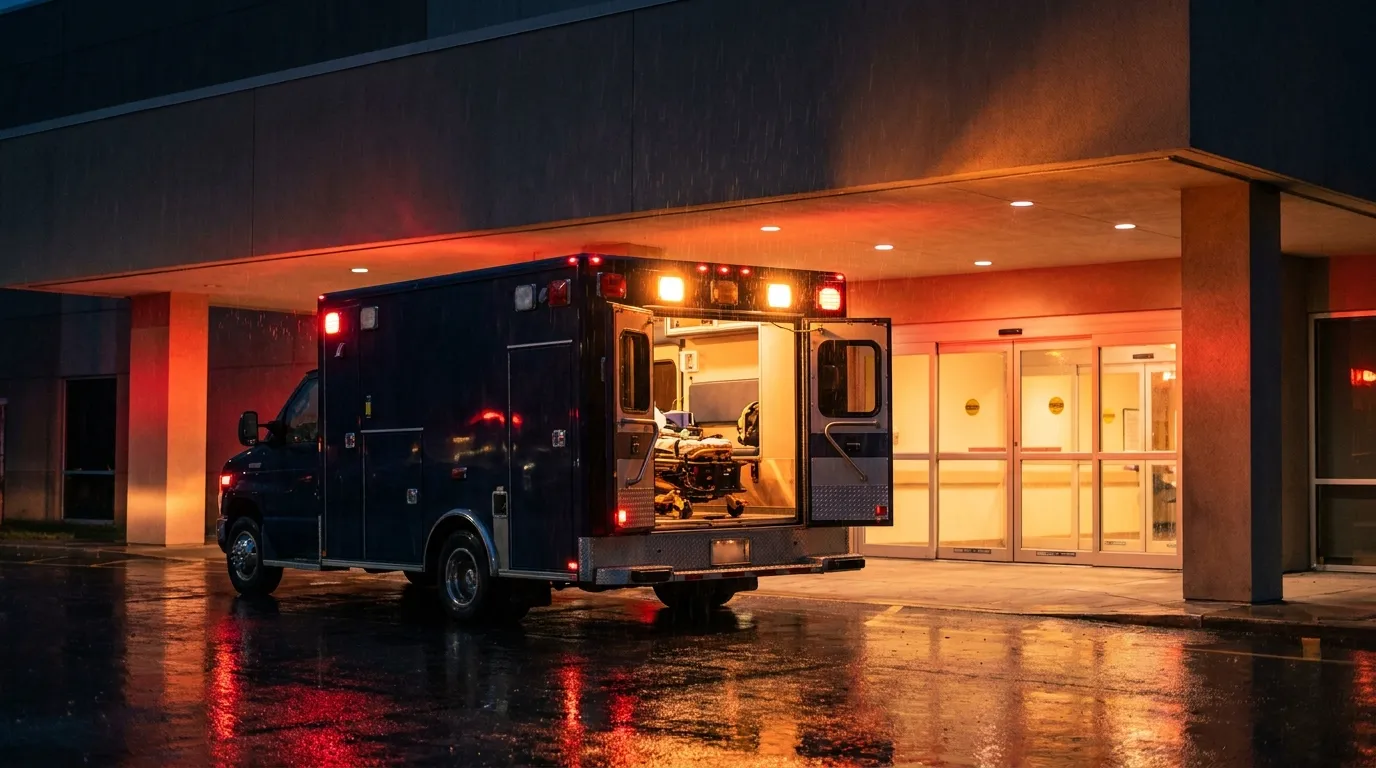
Hospital EMS data exchange means your chart reaches the emergency department electronically, and the hospital sends outcome information back to your agency. When both directions work, crews finally learn whether the needle, the tube, or the blood actually helped. When only one direction works, or neither does, every trauma call ends at the bay doors.
Most of us have been there. You give report, move the patient over, restock, and clear. Three days later you're still wondering if that guy from the rollover made it. That gap is frustrating, and it also leaves real holes in training and quality review.
Why don't medics ever hear how trauma patients do?
For most crews, the trauma bay doors are where the story stops. Once the patient is moved over, they disappear into a hospital system you can't see into.
Part of that is plumbing. Hospitals and EMS agencies usually run separate record systems that don't talk to each other. Paper handoffs get buried in a busy trauma bay, and faxes sit in a tray or never print at all.
Part of it is caution. Plenty of hospital staff believe HIPAA bars them from telling EMS how a patient did. It doesn't, at least not for quality work. The HIPAA privacy rule lets one covered entity share information with another for quality assessment and improvement when both have a relationship with the patient (45 CFR 164.506(c)(4)). Still, every hospital reads that rule through its own risk lens, so you'll need its privacy officer on board.
Without a real channel, feedback runs on hallway conversations. You catch an ED nurse you know, ask about the patient, and get a half answer. That never makes it into a QA file, and it never reaches the rest of the shift.
The cost shows up in training. Medics don't know whether a decompression was needed or whether the tube was still in the right place an hour later. Your QA team can't coach good medicine without knowing how the call ended.
How does two-way hospital EMS data exchange work?
Bidirectional hospital EMS data needs two separate paths. One carries your chart into the hospital's record. The other carries outcome information from the hospital, or its trauma registry, back to your agency.
On the forward path, the finished chart goes from the field tablet to the hospital, either through a direct connection to the hospital's record system or through a regional health information exchange. Most of these connections use shared health data standards so different systems can read the same chart. The hospital system then attaches your chart to the patient's ED record.
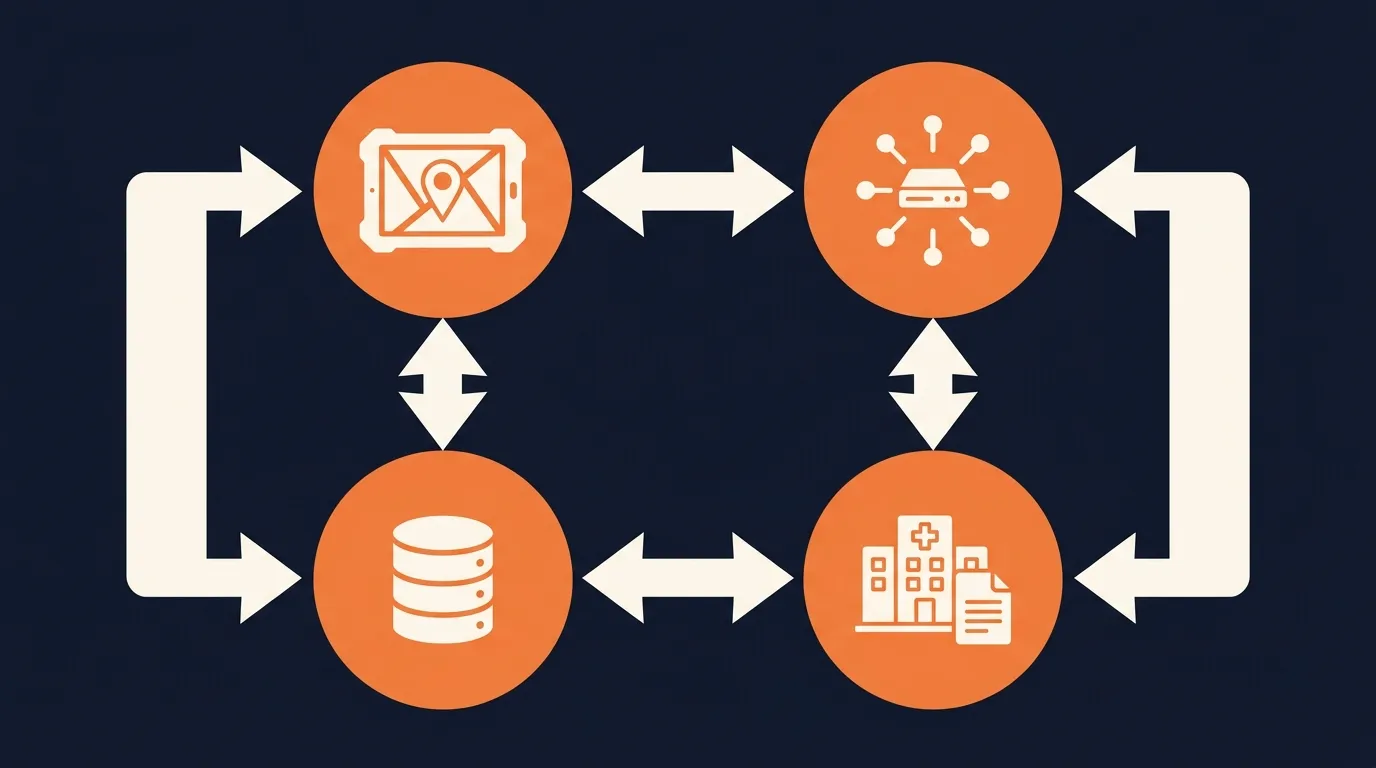
TEFCA, the federal Trusted Exchange Framework and Common Agreement, is meant to make this easier. It sets common rules so approved national networks can exchange records with each other, which can save an agency from building a separate connection to every hospital it transports to. Whether and how an EMS agency can take part today depends on your vendor and the network it connects through, so ask before you plan around it.
Matching is where clean charting pays off. The receiving system lines up your chart with the right hospital record using things like name, date of birth, sex, incident number, and arrival time. Sloppy demographics or a wrong arrival time can leave your chart floating unmatched.
The return path is the part most agencies are missing. After discharge, outcome details such as final diagnoses, injury severity, and operative findings can flow back into your QA queue. What actually comes back depends on your agreement with each hospital and its trauma program.
What can trauma outcome data teach your QA team?
Most EMS chart review only sees half the picture. You can check times, monitor strips, and vitals, but those tell you what the crew did, not whether the call was right.
EMS trauma registry data sharing fills in the rest. Your medical director can see whether a needle decompression matched a real tension pneumothorax on the CT. Comparing field calls with imaging is how you spot a training gap before it becomes a pattern. It also makes fair chart audits a lot easier to run, because the review is about the patient, not the paperwork.
Airway review gets sharper too. Supervisors can see whether a tube was still in good position on the first chest X-ray, and whether the patient needed to be reintubated in the ED.
Blood programs benefit the same way. If your service gives prehospital whole blood, outcome data lets your medical director look at field units given alongside what happened in the first day of hospital care.
| Procedure | What the field chart shows | What the hospital sends back | What QA learns |
|---|---|---|---|
| Needle decompression | Time of decompression and vitals before and after | CT findings for the chest | Whether the site and the decision were right |
| Endotracheal intubation | Laryngoscopy view and capnography | Tube position on the first chest X-ray | Tube depth, airway injury, and need to reintubate |
| Whole blood | Units given and shock index | Early survival and blood used in surgery | How field blood fits the shock picture |
| Pelvic binder | Exam findings and time applied | Pelvic imaging and operative notes | Whether the binder sat in the right spot |
Can hospital data exchange help EMS billing?
Clinical feedback isn't the only win from connecting your ePCR to the hospital EHR. Billing gets a lift too.
On a bad trauma call, nobody is digging for an insurance card. The patient may be unresponsive with no wallet and no ID, and your crew is busy with the airway, the bleeding, and the drive. That chart reaches billing with a placeholder name and no insurance, and the claim stalls.
Once the hospital registers the patient, its face sheet has the verified name, address, and insurance details. A data exchange that sends those demographics back to your agency can fill in the gaps without someone driving to the hospital to chase paperwork. Claims move faster, and the patient is less likely to get confusing billing calls while they're still recovering.
Why are receiving portals replacing the fax machine?
Lots of emergency departments still get run sheets by fax. Fax lines jam, run out of paper, or spit out pages nobody picks up during a resuscitation. Nobody in a trauma activation has time to hunt for a missing fax.
A secure web portal is a simpler fix for ambulance to emergency department data transfer. Charge nurses and trauma teams open it at the triage desk and see what's coming: incoming units, vitals, and field treatments, sometimes before the truck backs in.
Portals can also help with offload time. A shared, time-stamped record of when your crew arrived and when the hospital took over care cuts down on arguments about wall time. If offload delays are a fight in your county, our guide to APOT tracking covers how to document them.
And the hospital team gets the full chart, including ECG strips, without squinting at handwriting or waiting for a printout. They start work knowing what meds went in, what the vitals did, and when the clock started.
What does a closed loop look like on a real call?
Frequently asked questions
Does sharing hospital outcome data with EMS violate HIPAA?
No, not when it's done for quality work. Under 45 CFR 164.506(c)(4), a hospital may share information with another covered entity for quality assessment and improvement when both have a relationship with the patient. The minimum necessary standard still applies, and each hospital's privacy officer will want to set the terms.
Why are hospital IT teams slow to connect with EMS agencies?
They worry about security, upkeep, and building one-off connections for every charting vendor in the county. National frameworks like TEFCA aim to cut that down by letting approved networks exchange records under one set of rules, so a hospital doesn't have to maintain a separate link for each agency.
How does TEFCA help EMS share records across state lines?
TEFCA sets common rules and technical expectations for networks that exchange health records nationally. In principle, an agency connected through a participating network can reach hospitals beyond its home region, which matters for cross-county and cross-state transports. Ask your vendor what it supports today.
What outcome data can trauma registries send back to EMS?
Trauma registries collect a standard set of data, including ED arrival vitals, injury severity, diagnoses, procedures, and discharge disposition, as described in the American College of Surgeons National Trauma Data Standard. What actually gets shared with your agency depends on your agreement with each trauma center.
How do exchanges handle unidentified trauma patients?
When a patient arrives without ID, the chart can be matched using details like the incident number, unit, and arrival time. Once the hospital confirms the patient's identity and insurance, updated demographics can come back to your agency to replace the placeholder name.
How do you get started with hospital data exchange?
Start with the receiving hospitals you transport to most. Meet with their privacy officer and ED leadership, agree on what outcome data you need for QA, and ask your ePCR vendor which exchange options it supports. Clean, standards-based charting helps too, so it's worth reviewing your NEMSIS 3.5.1 readiness at the same time.
Mobile Medic includes a receiving hospital web portal where ED staff can review incoming charts and attached 12-leads, along with offload time tracking. See what's included on our features page.
Sources
- ONC: Trusted Exchange Framework and Common Agreement (TEFCA) (external site)
- American College of Surgeons: Trauma Quality Programs (external site)
- American College of Surgeons: National Trauma Data Standard (external site)
- eCFR: 45 CFR 164.506, Uses and disclosures to carry out treatment, payment, or health care operations (external site)
- JEMS: HIPAA and EMS: Navigating Information Sharing and Quality Improvement (external site)
- NEMSIS Technical Assistance Center (external site)